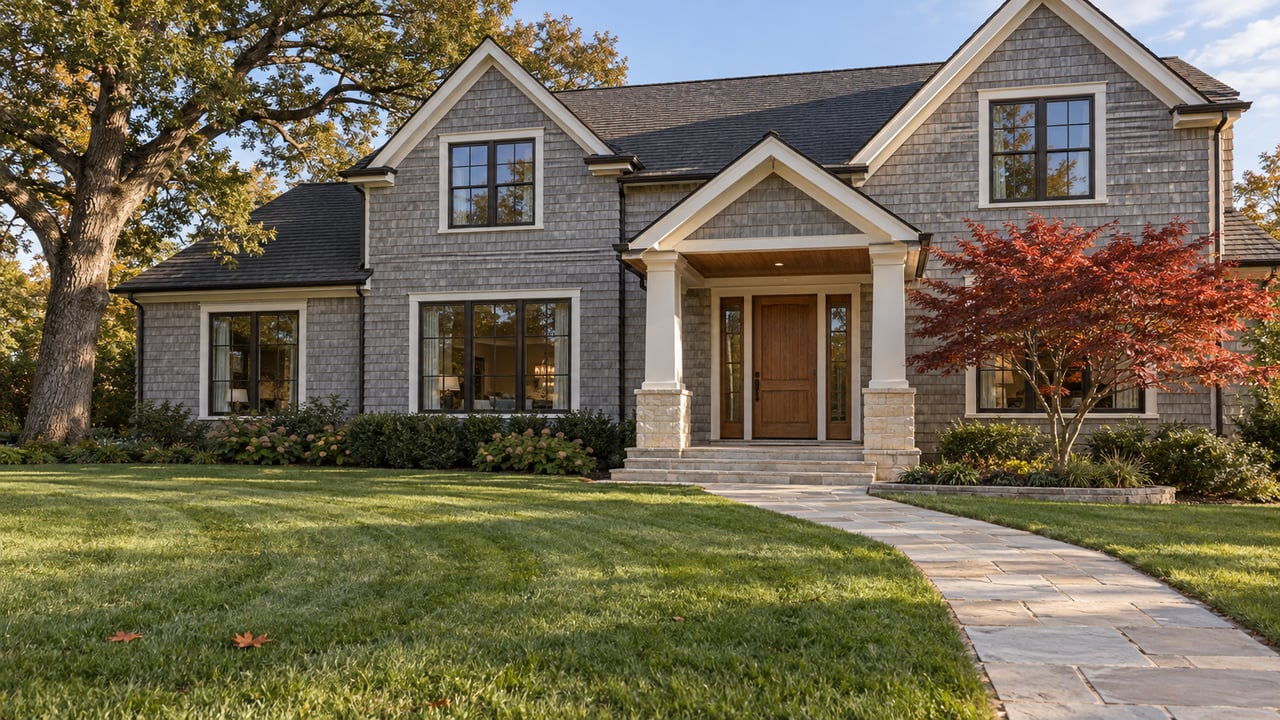
In September, a Hillview Avenue home in Los Altos was listed at $3,998,000 on a 12,600-square-foot lot. It drew 26 offers, 14 of them all cash, and the seller accepted an offer of about $6,700,000. In most transactions that would end the competition. This one was a probate sale, and as a Los Altos Town Crier report pointed out, California probate sales generally need court confirmation, and other buyers can overbid at the hearing. The minimum opening overbid on Hillview works out to about $7,035,500.
In a court-confirmed probate sale, the accepted offer becomes the public base for a second round. The bidders who lost can calculate the minimum they would need to offer at the hearing, starting from the price the estate's representative signed.
The Hillview home belongs to a wider fall pattern. According to the same Town Crier report, seven Los Altos homes have listed at or near $3,998,000 since March. Most were modest older houses on flat lots of 10,000 square feet or more, and buyers bid them up by $1,000,000 to $2,000,000. Many Los Altos houses on lots like these have been owned by one family for decades, so some reach the market through an estate. When that happens, the bidding war can have a second round.
The formula that turns $6.7 million into a starting line
California Probate Code section 10311 sets the minimum for a courtroom overbid. A new offer must be at least 10 percent more on the first $10,000 of the original bid and 5 percent more on everything above $10,000. The offer has to come from a responsible person and comply with the law. If it meets those conditions, the statute says the court "shall accept the offer and confirm the sale to the offeror."
At Los Altos price levels the minimum increase comes to just over 5 percent:
| Accepted original bid | 10% on first $10,000 | 5% on the balance | Minimum overbid at hearing |
|---|---|---|---|
| $4,000,000 | $1,000 | $199,500 | $4,200,500 |
| $5,000,000 | $1,000 | $249,500 | $5,250,500 |
| $6,700,000 | $1,000 | $334,500 | $7,035,500 |
The last row is the Hillview calculation. A buyer who lost in the September round and still wants the house knows exactly what it costs to reopen the contest: about $335,000 more than the price the representative accepted.
Several details in section 10311 shape how that second round plays out:
- Multiple overbids. If more than one qualifying overbid is made, the court accepts the highest, and the bidding continues in the courtroom.
- No obligation to accept. The court may decline a qualifying offer and order a new sale.
- Cash versus credit. If the original sale and the overbid differ on cash or credit terms, the court cannot consider the higher offer unless the personal representative tells the court it is acceptable.
- Commissions. Bids are compared without counting any agent or broker commission.
Why the court looks past the highest number
Confirmation is more than a formality. Under section 10308, title to estate real property passes only after the court confirms the sale. That holds for public and private sales, and it holds even when the will directs the sale. The one exception is the independent-administration route described below.
At the hearing, the court examines whether the sale is necessary or to the estate's advantage, and what the representative did to get the highest price reasonably attainable, according to section 10310. An interested person can file written objections by the hearing date. A confirmation order on form DE-265 includes a finding that the sale was legally made and fairly conducted. A private sale also has a price floor. Under section 10309, it generally needs an appraisal with a valuation date within one year of the hearing, and the sale price must be at least 90 percent of that appraised value.
The appraisal floor and the overbid rule both serve the estate's beneficiaries. The 90 percent minimum blocks a low sale. The overbid rule keeps the price open until a judge has looked at it.
Whether a probate listing goes to court depends on the representative's authority
Many Los Altos estate sales never reach a confirmation hearing. Whether one does depends largely on the representative's authority under the Independent Administration of Estates Act.
A representative who has been granted IAEA authority can handle much of the estate without court supervision, within the act's limits. The authority comes in two levels, and for real estate the difference is large.
- Limited authority. Under section 10501(b), a representative with only limited authority still needs court supervision to sell real property. These sales go to a confirmation hearing, overbids included.
- Full authority. Section 10503 lets a representative with full authority sell publicly or privately. The court-confirmation requirements do not apply to those sales, including publication, the minimum appraisal price and the overbid process.
- Living trust. The Santa Clara County Superior Court's probate FAQ says a successor trustee takes over a living trust and does not need the court involved. Trust property is separate from estate property sold through probate.
Full authority comes with its own checkpoint. Before acting without court supervision, the representative generally has to deliver a Notice of Proposed Action describing the material terms of the transaction, as section 10585 sets out. Under section 10586, the notice goes out at least 15 days before the date of the proposed action. The notice uses Judicial Council form DE-165, and the form warns that if an interested person objects, the representative may proceed only under court supervision. One objection from an heir can move a full-authority sale back into the courtroom path.
Three listings can all be called "estate sales" and still carry three different levels of finality. In a trust sale, the accepted offer behaves like an ordinary contract. In a full-authority sale, there is a 15-day notice window an heir can use to object. In a limited-authority sale, a public overbid round sits between acceptance and closing.
How it works at the Santa Clara County courthouse
For a Los Altos estate, confirmation happens in San Jose. The Probate Division hears matters at the Downtown Superior Courthouse, at 191 North First Street. New probate cases are randomly assigned to an all-purpose judge, and filings must name that judge and department.
The paperwork follows a set sequence:
- Accepting a contract. The representative accepts a purchase contract. The county's probate local rules recommend filing the confirmation petition within 30 days after acceptance, with a copy of the contract attached.
- Filing the petition. The filing uses mandatory form DE-260, the Report of Sale and Petition for Order Confirming Sale of Real Property. The form records the original buyer's deposit and calculates the minimum overbid.
- If the representative doesn't file. Section 10308 lets the buyer file the report and petition if the representative has not done so within 30 days after the sale.
- Setting a hearing. Parties reserve a hearing date on the probate calendar through the court's procedures.
- The hearing. Under the local rules, telephone appearances are not permitted for petitions to confirm the sale of real property.
- The order. If confirmed, the sale is recorded on form DE-265, which lists the hearing details, the court's findings, the confirmed price and the order to convey.
Compare that with the rest of the county. C.A.R. reported that Santa Clara County homes spent a median of 11 days on market in September 2026. A court-confirmed probate sale adds a petition, a reserved hearing date and a hearing with no telephone option after the offer is accepted. During that time the accepted price is in a public court filing.
Questions that sort one estate listing from another
Two Los Altos estate listings can look the same on paper and behave very differently after acceptance. These questions are worth raising with the listing side and with your own probate attorney before writing or accepting an offer:
- Is the property held in a living trust or in a probate estate?
- If it is in probate, does the representative have full or limited IAEA authority?
- If the authority is full, has a Notice of Proposed Action gone out, and has the 15-day window passed?
- If confirmation is required, has the DE-260 petition been filed, and has a hearing date been reserved?
- Was the appraisal used for the 90 percent floor valued within one year of the expected hearing?
This post is general information about California probate procedure. It is not legal, tax or financial advice. Buyers, executors and heirs should confirm how these rules apply to them with a qualified probate attorney.
FAQ
Can a buyer who lost the first round still buy a Los Altos probate home? Yes, if the sale requires court confirmation. Under section 10311, an offer at the hearing that meets the overbid minimum and the statute's other conditions must be accepted, unless the court orders a new sale.
Does every probate sale have an overbid hearing? No. Sales by representatives with full IAEA authority are exempt from the overbid process, and trust sales by successor trustees do not involve the court.
Can the hearing be attended remotely? In Santa Clara County, telephone appearances are not permitted for petitions to confirm a real property sale.
Pricing a Los Altos estate home starts before the list price, with the question of whether the sale will have a courtroom round. If you are an executor, a trustee or an heir preparing a family home for sale, Ryan Gowdy can help you plan the pricing, marketing and timeline around the authority your estate actually has, working alongside your probate attorney. Request a complimentary home valuation and consultation.