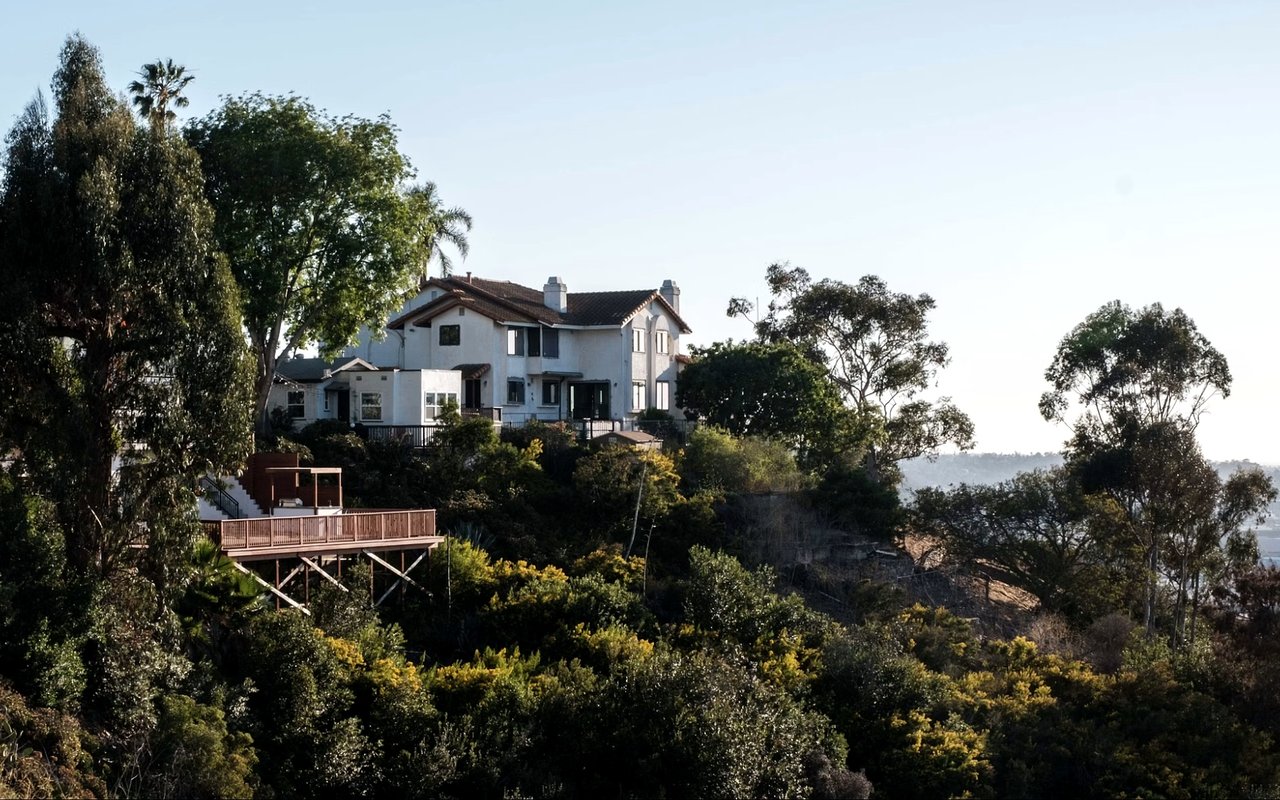
A Los Altos Hills building permit application for a new accessory dwelling unit cannot be filed until an agency with no seat on the town council has already signed off on it. That agency is Santa Clara County Environmental Health, and its job has nothing to do with setbacks, roofline, or how the guest house matches the main residence. It has to do with what happens underground. The town's own ADU ordinance states plainly that Environmental Health must confirm the property's septic system can serve the new unit before a building permit is even submitted. For anyone pricing a guest house into a purchase, or marketing one as upside in a listing, that single sentence controls the calendar more than anything in the town's design guidelines.
Two Approvals, Two Agencies, One Order
Most buyers picture ADU approval as a single conversation with the town: submit plans, get design review, pull a permit. In Los Altos Hills, that conversation only opens after a separate one closes. Santa Clara County's Department of Environmental Health runs its own review track for any property that will rely on a septic system, formally called an onsite wastewater treatment system, to serve a proposed ADU. The county's process outlines six steps: submit a scope of work, receive a determination on whether the existing system needs an upgrade, request an OWTS design review if one is required, obtain project approval, schedule inspections, and finally request the county sign-off the town will need for its own building permit file. None of that happens inside town hall. It happens with a county agency whose calendar and staffing has nothing to do with how fast the town's building division wants to move.
Why Septic Is the Default, Not the Exception
This gate exists for a structural reason specific to the town. Santa Clara County's septic bulletin for Los Altos Hills states that permits for onsite sewage disposal systems are only issued where a sanitary sewer is not available within 200 feet of the building. In practice, that condition describes most of the town. Los Altos Hills was built out on large, hillside lots well before public sewer lines reached deep into the foothills, and a great many parcels still sit outside that 200 foot radius today. Septic is not a workaround here. It is the only legal wastewater option for a large share of the town's housing stock, which is exactly why the county, not the town, holds veto power over anything that adds plumbing fixtures to a property.
There is an exception worth knowing if you are evaluating a specific parcel. Where a sewer main genuinely does run within 200 feet, the county will not issue a new septic permit at all, and connection to the municipal system becomes the only path. Septic to sewer conversions in the South Bay typically run $10,000 to $25,000 depending on distance to the main and site conditions, according to a 2026 accounting from a regional trenchless contractor. That is a meaningfully different cost and timeline than upgrading an existing septic system, so confirming which category a property falls into is worth doing before any ADU design work begins.
The Six Steps Before a Shovel Moves
For the majority of Los Altos Hills lots that remain on septic, the county's review has real teeth. If the property owner wants to use the existing system to serve the ADU, the county requires a current septic pumper's report, no older than three years, and in some cases a 30-minute water test to verify the system is functioning as designed. If that documentation shows the system meets current standards and can absorb the added load, the county stamps the site plan "approval recommended" and forwards it to the town's planning department. From there, no additional county steps are needed, and the ADU proceeds through the town's normal building permit process.
If the existing system does not meet current standards, the outcome is different. The county requires the owner to design and build an upgrade, potentially including new feasibility testing of the soil, before that clearance is issued. Only once the upgraded or expanded system is approved does the file move to the town. In other words, the town's building permit clock does not start ticking until the county's septic review has already finished, whichever direction it finishes in.
The Five-Month Window You Can Miss by One Bad Report
The county review has no fixed calendar restriction. It can be requested and processed at any time of year. Physical construction is a different matter. The Los Altos Hills septic bulletin bans septic installation and repair work outright between November 1 and April 1 each year, with emergency repairs allowed only if the town approves an erosion control plan first. That window exists to protect hillside soils during the rainy season, and it applies regardless of how quickly the county's paperwork moved.
This is where a straightforward ADU project can lose months without anyone doing anything wrong. If a septic pumper's report comes back in September showing the system needs expansion to serve a new unit, and the design and permitting for that upgrade take even a few weeks to finalize, the earliest date construction can legally begin is the following April. The paperwork isn't slow. The season is closed. For a buyer counting on breaking ground shortly after closing, or a seller who assumed a fall listing wouldn't affect an already-planned addition, that gap is the kind of detail that only shows up once you're already under contract.
Hillside terrain adds to the risk of landing in that position. A March 2026 report on Peninsula sewer inspections, which used a Los Altos Hills property to illustrate the point, noted that homes on sloped lots see more underground line trouble from tree roots and shifting soil than flatland properties do. Septic tanks and drainfields sit in that same ground. A system that served a house without complaint for twenty years can still fail a fresh county evaluation once a new unit adds to its load, particularly on a slope where roots and settling have had decades to work on buried pipe.
What This Costs, and Who It Changes for
Santa Clara County ADU construction in 2026 runs from roughly $175,000 to $450,000 or more depending on scope, and sewer or septic upgrades are named directly among the factors that push a project toward the higher end of that range. Systems that were sized and approved under older county standards are not automatically legal to expand. A tank and drainfield built decades ago for a four bedroom house was not engineered with an additional unit's fixtures in mind, and the county's current review measures against today's standards, not the standards in place when the system went in.
This matters most for how an ADU gets talked about before it exists. A seller listing a Los Altos Hills property with "room for a guest house" is making a claim about acreage and setbacks. The county clearance is a separate claim about capacity, and it is the one that actually determines whether a buyer can act on that upside within a normal ownership timeline. A documented pumper's report and, where warranted, an early conversation with Environmental Health turns a marketing line into a number a buyer's lender and contractor can actually plan around.
What the Ban Doesn't Touch
It is worth being precise about what the seasonal restriction covers, because the two halves of this process are easy to conflate. The November through April window applies to physical installation and repair work in the ground. It does not apply to the county's paperwork review. A scope of work submission, a pumper's report evaluation, or an OWTS design review can move forward in December just as it can in June. What cannot move forward in December is a crew breaking ground on a new drainfield. Knowing that distinction is the difference between planning around the ban and being surprised by it.
The other detail worth stating plainly: an existing septic system serving the main house without issue does not automatically clear an ADU. The county's confirmation is specific to the added unit's load, which is why the pumper's report and, in some cases, the water test are required even on a property with a long, uneventful septic history.
If you're evaluating a Los Altos Hills property with an ADU in mind, or preparing to list one where guest house potential is part of the pitch, Ryan Gowdy can help you get the septic question answered before it becomes the thing that stalls escrow. Request a complimentary consultation to map out what the county's review will mean for your timeline before you write the offer or set the list date.