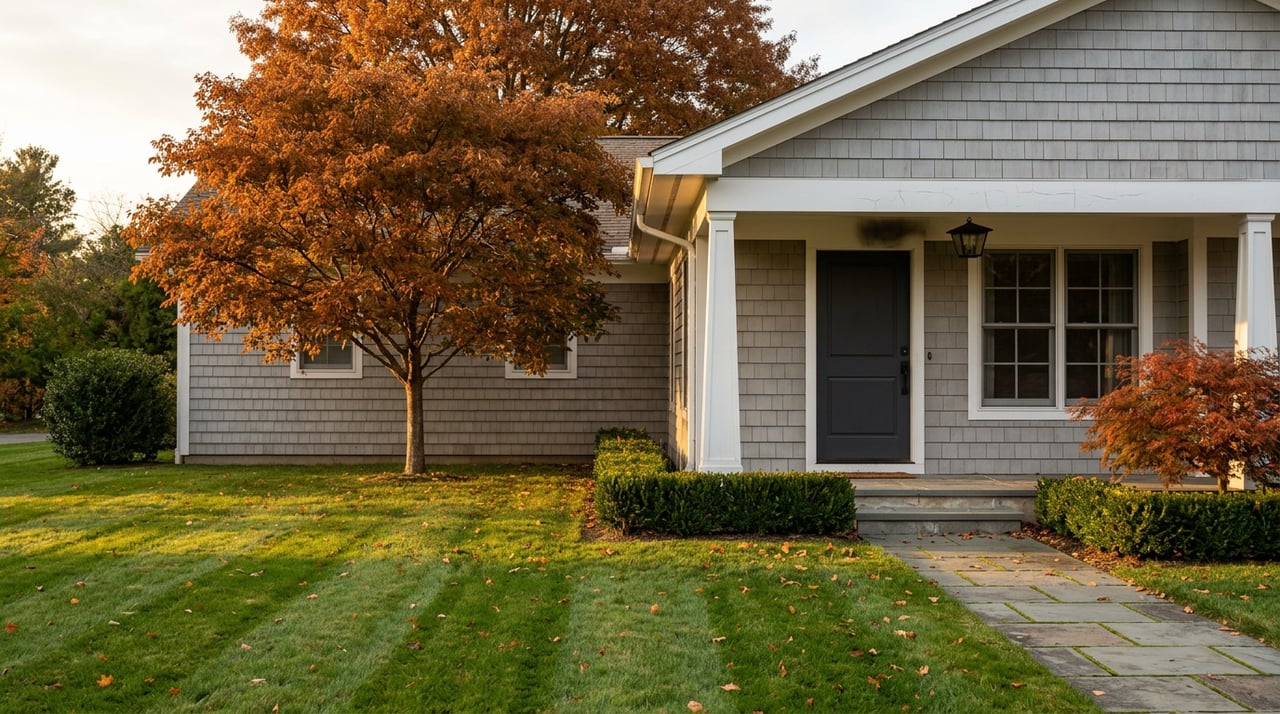
Mountain View is behaving like a market with too many buyers and not enough houses. Citywide, homes were going under contract in roughly 13 days as of mid-2026, with the average sale price landing above 104 percent of list. Zillow's tracked home value for the city climbed to just under $1.96 million by July 2026, up nearly 2 percent over the prior year. That is the picture most sellers expect when they list: a fast, competitive process that rewards patience and punishes underpricing.
Monta Loma is not following that script. In the three months ending March 2026, the mid-century neighborhood's median sale price came in at $1.9 million, down close to 10 percent from the same stretch a year earlier. Homes that used to go under contract in 9 days were taking 14. Only six houses closed there in March, against seven the year before, a small enough sample that any single quarter deserves some skepticism. But the direction is consistent with what agents working the neighborhood have been describing for months: a market that is cooling exactly where the rest of the city is heating up.
The Number That Doesn't Match the Rest of the City
A price drop inside a hot city usually means one of two things. Either the neighborhood has a supply glut, or buyers are pricing in a risk that doesn't show up in a standard comp sheet. Monta Loma doesn't have a glut. What it has is a pending zoning decision that changes what a given lot is legally allowed to become, and that decision is landing on some addresses and skipping their neighbors entirely.
The mechanism is Mountain View's R3 Zoning District Update, a rewrite of the city's multifamily zoning rules that has been moving through City Hall since 2019. The update does two things at once. It replaces the current R3 standards with form-based rules meant to make apartment buildings and stacked flats easier to build. And, separately, it carries out a mandate from the city's 2023 to 2031 Housing Element requiring officials to review every R2-zoned property and decide, parcel by parcel, whether it should be folded into the higher-density R3 zone or left alone.
That second piece is the one sellers in Monta Loma need to understand before they set a list price.
A Rezoning Project Seven Years in the Making Is About to Land
The timeline matters because this is not a distant planning exercise. The City Council voted 5 to 1 on February 10, 2026 to advance the form-based rewrite and give staff direction on the parcel-level rezoning. The city then released a draft Environmental Impact Report for public review, with the comment window running from May 15 through June 29, 2026. City staff have described adoption as tentatively scheduled for the third or fourth quarter of 2026, which puts a final decision somewhere between now and the end of the year.
The review covers roughly 8,350 parcels across about 1,260 acres of the city, according to the environmental notice published in May. That is a large share of Mountain View's residential land, but the update does not treat all of it the same way. The city's own criteria for choosing which R2 parcels move into R3 focus on areas south of El Camino Real and the streets surrounding downtown, while also excluding parcels that back directly onto existing R1 single-family lots. In plain terms, the city is drawing a line down the middle of some neighborhoods rather than applying one rule citywide.
The Discretion Is the Point
It would be easy to lump this in with Senate Bill 9, the 2021 state law that already lets most California homeowners split an R1 lot or add units without a local rezoning fight. Buyers and agents have had years to price SB9 into their expectations, and it applies close to uniformly wherever the state law reaches.
The R3 Change Area designation works differently. It is not a statewide right available to any qualifying lot. It is a discretionary label the city is assigning to specific parcels, chosen by council direction rather than a formula anyone can apply from home.
That distinction is exactly why the Redfin numbers for Monta Loma look the way they do. A neighborhood-wide median blends parcels that developers might want to assemble with parcels that will never be anything other than a single detached home. When buyers can't easily tell which category a given address falls into, some of them price in caution rather than upside, and that caution shows up first in slower days on market and softer closing prices.
Same Block, Two Different Zoning Futures
The clearest evidence that this is happening street by street, not neighborhood by neighborhood, comes from the public comments the city has collected on its Collaborate Mountain View portal. In Cuesta Park, residents flagged Nilda as a street of small, roughly 5,500 square foot lots where four-story buildings permitted under the density bump would tower over existing one-story homes and block afternoon sun into neighboring backyards. They flagged Bonita, already the densest street in the neighborhood, as unable to absorb the parking that a hundred or more new units would bring, since the street dead-ends and neither Hans Avenue nor El Camino Real can take the overflow. One resident's proposed fix captures the whole problem: put one side of Bonita in R3 and leave the other side at a lower density, rather than drawing a blanket line across the entire street.
Monta Loma has its own version of this fight. At the February 10 council meeting, resident Olga Bright objected to proposed densification along San Antonio Road, arguing that most people in the neighborhood had no idea the changes were coming. City advocates pushed back, noting the item has been moving through public hearings since 2019. Both things can be true. The process has been public for years, and most homeowners still don't track it closely enough to know whether their own parcel sits inside a Change Area or outside one, until it starts affecting how their listing performs.
What This Means Before You Price a Listing or Write an Offer
None of this shows up on a standard listing sheet. A buyer scrolling through comps sees square footage, lot size, and a sale price. They do not see whether a house sits inside a city-designated Change Area with real assembly potential, or just outside one, permanently capped at its current density.
Before pricing a Monta Loma or Cuesta Park listing, or writing an offer on one, it is worth checking a few things directly against the city's zoning map rather than relying on a portal's automated valuation:
- Whether the specific parcel falls inside one of the draft R3 Change Areas, which the city's Collaborate Mountain View site maps alongside the current zoning
- Whether the parcel sits in a designated transition area
- Whether nearby comps used to justify a list price come from parcels with a different zoning designation, which would make them a poor match despite similar square footage
- Where the process stands relative to the tentative Q3/Q4 2026 adoption date, since a final vote could firm up or narrow the current Change Area boundaries
For sellers, that means a comp two doors down might be pulling from a fundamentally different asset class. For buyers, it means the upside case for a given address depends on a zoning designation that isn't final yet and could still move before the council adopts it.
A Few Questions Worth Asking Before You Act
Does this affect the whole city, or just certain streets? The update's own criteria target parcels south of El Camino Real and around downtown, plus specific R2 corridors the council has flagged, including sections of Monta Loma near San Antonio Road and parts of Cuesta Park. Neighborhoods like Waverly Park and Old Mountain View, which sit largely in established R1 zoning, are not part of the R2-to-R3 review in the same way.
Is this the same thing as SB9? No. SB9 is a state law that applies broadly to qualifying R1 lots regardless of local zoning maps. The R3 Change Area designation is a city-level, discretionary decision that only applies to the specific parcels the council selects.
When will this actually be decided? The draft Environmental Impact Report's public comment period closed June 29, 2026, and city staff have described adoption as tentatively scheduled for the third or fourth quarter of 2026. Anyone pricing a listing or an offer in this window should confirm where the final map stands before treating any current draft boundary as permanent.
If you are weighing a sale in Monta Loma, Cuesta Park, or anywhere else in Mountain View where a rezoning line might be running through your street, the right first step is a parcel-specific look at where the city's map actually sits today, not a citywide average. Ryan Gowdy has spent more than twenty years reading Silicon Valley's local market mechanics, and offers a complimentary home valuation and consultation for owners who want a clear read on what their specific address is worth in this environment, zoning line included.
This article is general information, not legal, tax or financial advice. Consult a qualified professional about your situation.